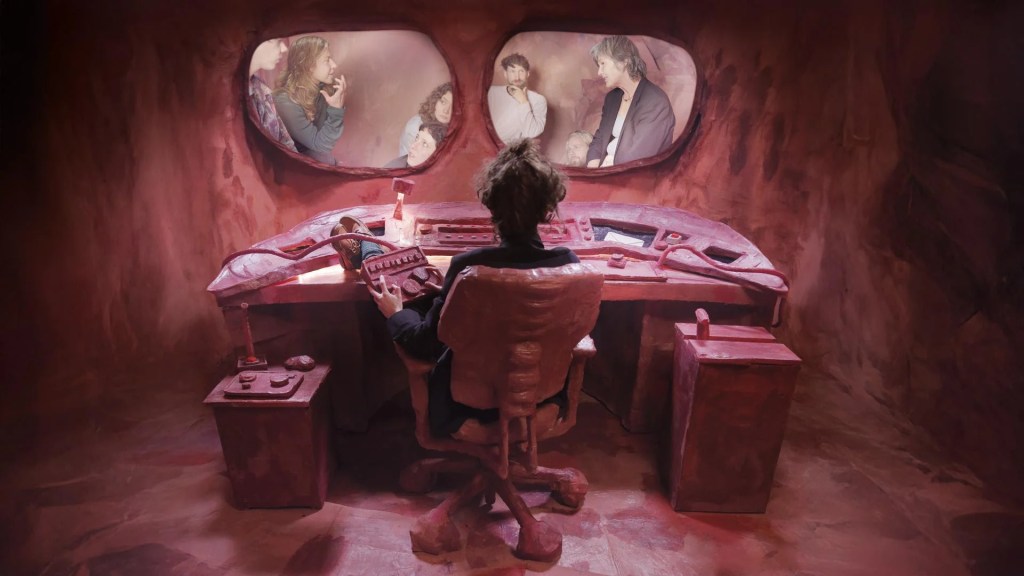
From the outset, Sound Image Culture (SIC) defined itself through a strikingly interdisciplinary constellation, drawing on references as varied as Jonas Mekas, Maya Deren, Trinh T. Minh-ha and Front 242. Conceived as a laboratory – a safe space for experimentation and development – the annual workshop gathered a carefully chosen group of practitioners to participate in collective feedback sessions alongside individual coaching. Though its emphases and institutional framework have shifted over time, its core has remained constant: an open, cross-disciplinary exchange committed to interrogating the fundamental conditions of audiovisual creation.1
The seed of SIC was planted in the Visual Anthropology workshops organised between 1996 and 2005 by filmmakers and lecturers An van Dienderen and Didier Volckaert, together with colleagues such as anthropologist Rik Pinxten and documentary maker Rob Rombout, at Ghent University’s research programme Vergelijkende Cultuurwetenschap (Comparative Science of Cultures) and the Sint-Lukas film school in Brussels (now part of LUCA School of Arts). Each year these workshops drew together students of theoretical anthropology and emerging documentary makers, inviting them to jointly explore how the subjects of audiovisual works are ‘imagined’ through the medium itself. The outcomes regularly travelled to the Viewpoint documentary festival in Ghent, and, memorably, to the streets of Brussels during the city’s year as European Capital of Culture in 2000. Under the banner Crossing Brussels, student films made in the city’s neighbourhoods were screened on public buses across the capital, bringing moving images directly into the daily rhythms of the people who had been filmed.2
The set-up of these workshops was deeply entwined with the burgeoning field of visual anthropology, which at the turn of the millennium was finding new momentum both in academia and in the arts. With the so-called ‘ethnographic turn’ in contemporary art, questions of the politics of representation – previously raised mainly within anthropology – were increasingly taken up in galleries, museums and projection spaces from the 1990s onwards.3 It was within this expanding dialogue between art and anthropology that Van Dienderen and Volckaert found a key point of reference in Catherine Russell’s Experimental Ethnography (1999). In this book, Russell argues that experimental and ethnographic film are not separate categories but closely connected. Her call to unite aesthetic inquiry with cultural critique resonated strongly with the pedagogical project Van Dienderen and Volckaert were shaping.
International and independent
The ambition of the workshops at Ghent University and Sint-Lukas soon come up against the constraints of the framework in which they were embedded. Much was demanded of students for what remained, after all, a relatively modest course within a larger curriculum. The decision was therefore made to reimagine the workshops as an independent entity: Sound Image Culture. Van Dienderen and Volckaert, who had already welcomed filmmakers such as Renzo Martens, Eric Pauwels and Laurent Van Lancker into the workshops, were eager to move beyond the confines of educational institutes and to establish an artistic space with international scope. Both in Belgium and abroad they perceived a striking absence: the lack of precisely the kind of “interdisciplinary laboratory” they envisioned, one that could provide “the combination of anthropological discourse with the experimental, exploratory quality inherent to the artistic métier”.4
Initially, in 2006 and 2007, support was sought through the existing production structures of the filmmakers involved, and later through a newly established non-profit organisation, first applying for project-based and subsequently for structural funding under the Flemish Arts Decree. This route was deemed more suitable than the Flemish Audiovisual Fund (VAF), founded in 2002 to subsidise film in Flanders but traditionally showing little affinity for experimental cinema. Indeed, the Filmlab category for experimental audiovisual work was only introduced in 2008 and remains modestly funded, leaving few producers in Flanders willing to support such applications.5 Moreover, unlike French-speaking Belgium, Flanders lacked a network of production ateliers, and VAF has historically been reluctant to establish or support such structures.
When it became clear that SIC – with its multidisciplinary approach and commitment to research – could not find a place within VAF, it saw a more appropriate funding route through the Flemish Arts Decree, which supports dance, theatre, and visual arts, apart from the two autonomous funds for film and literature in Flanders. For the first time, in 2006-2007, the Arts Decree introduced the category of the “artistic workspace”, designed for organisations that accompany artists in their creative process without requiring a finished outcome. While the broad and somewhat ambiguous definition of this new category caused some uncertainty within the Flemish arts scene,6 the label “artistic workspace” resonated with SIC’s process-oriented programme. The principal aim of the newly independent SIC was, after all, to redirect its focus towards project-driven artists, anthropologists, and filmmakers, rather than, as before, towards students absorbed primarily in the formalities of completing their studies.
In June 2008, Van Dienderen and Volckaert were joined by Van Lancker, Pauwels and photographer Reinhart Cosaert to formally establish SIC. Bound together by a shared fascination with film and anthropology, the founders brought to the table markedly distinct poetic traditions, creating a rich dialogue of cinematic sensibilities. Volckaert probed the material foundations of (pre)cinema through the experimental practices of Jonas Mekas and Len Lye, while Van Dienderen drew on the postcolonial insights of theorist and filmmaker Trinh T. Minh-ha. Van Lancker’s theoretical and practical work was situated within ‘sensory ethnography’ and focused on going beyond genres, whereas Pauwels carried the legacy of ethnographic filmmaker Jean Rouch, who had guided his doctoral work in cinema.
Drawing on their diverse backgrounds and perspectives, the founders set out to explore the intricate relationship between maker, filmed subject, and viewer, placing emphasis not on the finished product but on the creative process itself. SIC also offered guidance on potential funding applications and organised public presentations. In its early years, these were hosted at Netwerk arts centre in Aalst, which served as SIC’s primary logistical and administrative partner, before Beursschouwburg, Pianofabriek and Argos in Brussels later assumed that role. Netwerk also presented the 2011 exhibition SoundImageCulture. Poetics of Observation – curated by María Palacios Cruz – which offered an overview of work produced during SIC’s first five years alongside films by the coaches. Whereas the earlier workshops drew on anthropology and film students from Ghent and Brussels, SIC opened itself to international participants through a call for project proposals positioned at the intersection of visual art, anthropology, and documentary. Unlike their predecessors, applicants were required to bring prior artistic experience, allowing SIC to concentrate more fully on the visual-anthropological questions at the heart of its mission. Each year, around ten participants were selected to undertake a nine-month programme combining theoretical and practical collective seminars, individual coaching, and joint feedback sessions – a methodology that has endured largely unchanged for over twenty years.
Diversity and fundamental (un)freedom
Although international participants sometimes struggled to navigate the Aalst-Ghent-Brussels triangle in SIC’s early years, the workshop soon earned a reputation that extended far beyond Belgium’s borders. From the outset, SIC attracted both international participants and coaches, drawn in part by the rapidly emerging field of visual anthropology – a development also evidenced by the almost simultaneous founding of the Sensory Ethnography Lab at Harvard in 2006. Another appeal lay in the programme’s multidisciplinary breadth, reflected across its various modules. As Van Dienderen recalls: “I remember Ben Russell, whom we invited very early on as a coach, being very surprised that we were working with Jonas Mekas, Maya Deren, Trinh T. Minh-ha and Front 242 all at once.”7
Indeed, Patrick Codenys – keyboardist of electronic body music pioneers Front 242 and long-time teacher of audio and video – oversaw the audio post-production of several SIC projects. Among the other coaches and guest speakers in the early years were filmmakers and anthropologists Jeff Silva and Itsushi Kawase, lecturer and visual anthropologist Chris Wright, performance maker and writer Ant Hampton, curator Katerina Gregos, art critic Pieter Van Bogaert, and filmmakers Sanaz Azari, Mary Jiménez, and Els Opsomer.
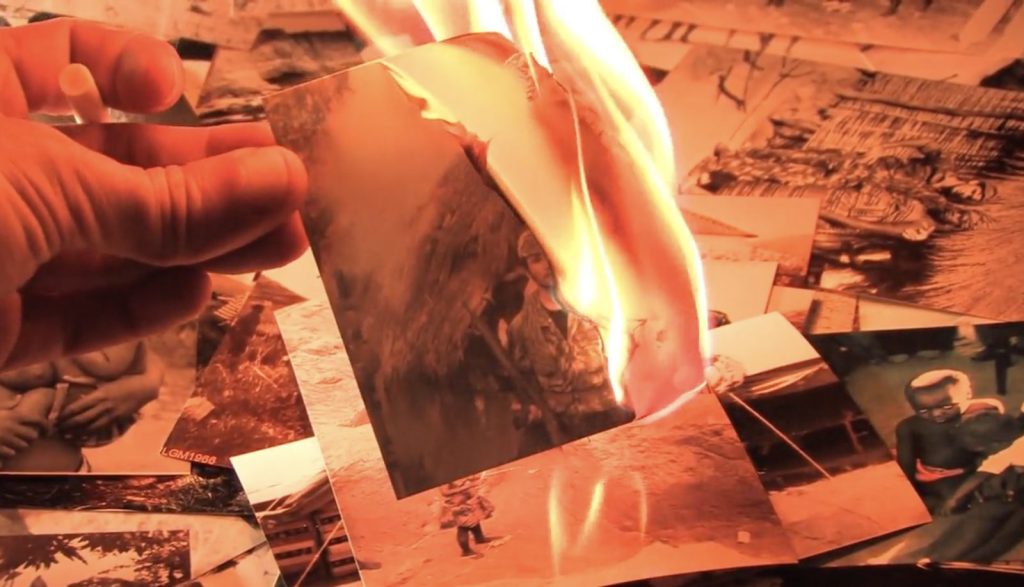
The work emerging from the workshops frequently linked medium-specific concerns with complex personal and societal themes. The title of Miguel Peres dos Santos’ There Are No Images (2016) is telling in this regard. In a dialogue between a father, a son, and a deceased child, the film poses a haunting question: “If an image dies… what will happen to memory?”
Whenever collective memory is called into question, issues of postcolonial identity and the political function of archives almost inevitably arise. Cinema is far from a neutral medium in this regard. At a time when image-making has grown increasingly effortless through digital technologies and, more recently, artificial intelligence, SIC has from the very beginning stressed the necessity of scrutinising the position of makers in relation to both their subjects and their audiences. The most recent mission statement expresses this as follows: “SIC is a laboratory for projects that look consciously and ethically at their own conditions of existence.”8
That the foundations of cinema touch on the foundations of human existence is evident in Amir Yatziv’s Another Planet (2017). This animated documentary stages a dialogue with the creators of various virtual models of the Auschwitz-Birkenau concentration camp within the digital worlds they have constructed. As the different creators, embodied as avatars, walk through their own virtual death camps, Another Planet confronts both makers and viewers with the obsessive drive to represent the Holocaust. By refusing to submit to the familiar pigeonholes into which artistic creation is so often forced –particularly in commercially oriented settings – SIC projects cultivate a space in which the choice of medium, such as 3D animation in Another Planet, could be made consciously and deliberately, free from predetermined restraints. As the latest mission statement declares: “SIC is inspired by the bounty that comes from blurring boundaries.”9 Each selection of medium is accompanied by a rigorous interrogation of that audiovisual form and of the maker’s position in deploying it. This freedom of choice has repeatedly proven to be the very condition necessary to question not only the unfreedoms inherent in the creative process itself but also the broader societal and economic structures in which it is embedded.
A search for institutional embedding
While SIC prides itself on offering its participants an open space, independent of rigid institutional or production frameworks, the organisation itself has repeatedly been in search of a suitable structure to sustainably support its activities. Although SIC had sought from the outset to distance itself from an academic context, it long remained a project with a pronounced educational focus. At the same time, the very independence it cherished soon sparked a desire to anchor the small organisation more firmly within a larger entity.
After several years of project-based funding, SIC secured structural support through the Flemish Arts Decree for the period 2010-2012. For the subsequent application, covering 2013-2014, business coordinator Ilse Joliet and artistic directors Van Dienderen and Van Lancker proposed an intensive collaboration with the Brussels-based centre for audiovisual arts, argos.10 This partnership was realised in terms of logistics and (post-)production support, but the envisaged merger of SIC and argos in 2015 ultimately did not come to fruition.
When SIC ceased to receive support through the Flemish Arts Decree from 2017 onwards, a change of course became necessary. The founding generation of organisers was succeeded by artistic director Mary Jiménez, who had long been active as a coach. Alongside Van Lancker and Codenys, she shifted SIC’s primary funding focus from the Flemish government to their Francophone counterparts. From 2018, the Centre du Cinéma et de l’Audiovisuel (CCA) added SIC to the production ateliers it supports, initially for a two-year period, and subsequently – from 2023 to 2026 – for four years, aligning it with the longer-established ateliers. This institutional shift not only meant moving to a different linguistic community within Belgium; it also brought the formation of a new board of directors for the non-profit and integration into the existing network of production ateliers, united under the Association des Ateliers d’Accueil et de Production Audiovisuelle (AAAPA). Of course, individual SIC projects had, even when supported by Flemish subsidies, already found their way to some of these ateliers – and some films had received creation funding from the VAF. Yet, where SIC had once maintained a deliberate distance from production, its new positioning brought it closer than ever to full production facilities. Still, SIC proved itself complementary to the existing ateliers by remaining committed to its year-long programme through which filmmakers can carefully refine and develop their projects. No other production atelier offers such sustained guidance, and thus they often turn to SIC. At the same time, for projects emerging from SIC, the threshold between development and production has grown markedly thinner. Recent feature-length documentaries such as Make it Look Real (Danial Shah, 2024), De originele Karina Beumer (Karina Beumer, 2025) and Fracture (Keren Kraizer, 2025) bear the fruits of this renewed dynamic.
Guided by process
Alongside the gradual stepping back of SIC’s founders from 2017 on, a new generation of coaches emerged. Artists such as Effi Weiss, Amir Borenstein, and Susanne Weck, who had previously participated in the workshops, were invited to return in the role of coaches. Whereas seminars were once led by coaches, they are now entrusted to other experts in the field. To this end, SIC has invited international artists such as Roee Rosen, Salomé Lamas, Yaël Bitton, Avi Mograbi, Ruth Somalo, Louis Henderson, and Emmanuel Marre.
This institutional and organisational evolution ran in parallel with a subtle shift in focus, though the core principle of a collective, laboratory-like workshop – anchored in dialogical interaction between artists – has been preserved. As Jiménez explains: “We do theory through practice, not the other way around. Thinking is done through images and sounds.”11 In this sense, SIC now positions itself against two manifestations of the written word within the field of audiovisual arts. On the one hand, it has redefined its engagement with (anthropological) theory; on the other, it offers a deliberate counterpoint to the dossier-driven culture that has gradually entrenched itself within the film world. As Jiménez states: “We consciously avoid all kinds of interfaces, favouring the impulse of creation directly by doing – producing images and sounds.”12
These shifts are not abrupt, but rather part of a long trajectory both within and beyond SIC. At the time of the first Visual Anthropology workshops at Ghent University and Sint-Lukas in the 1990s, such courses were among the very few of their kind internationally, alongside the Granada Centre for Visual Anthropology at the University of Manchester, founded in 1987. SIC’s founders felt compelled to carve out a space where visual anthropology and filmmaking could enter into dialogue – theoretically as well as practically – at a time when such intersections were still largely unacknowledged.
Over the following decades, the field expanded exponentially. By the 2020s, visual anthropology had become a firmly established area of research and practice at universities and film schools worldwide, with works at the intersection of ethnography and moving images regularly showcased at festivals, biennales, museums, and galleries. This international growth was accompanied by a process of professionalization in the entire audiovisual sector, creating an ecosystem of grants, workshops and producers. Yet with this professionalisation also came the emergence of formatting pressures, even in domains where experimentation is meant to play a crucial role.
In this era where art is often engulfed by discourse, SIC has shifted its emphasis towards cultivating a broader constellation of reflections that is more closely entwined with the practice of filmmaking itself. While focusing less on theory as such, SIC’s discursive and reflexive side has not withered away. Ethical questions surrounding (documentary) images and the power relations between maker and subject remain central to SIC, and the decolonial critiques of visual anthropology continue to provide inspiration. Yet in recent years, these concerns have become less directly tied to explicit theoretical thinking. The fixed module in which first An van Dienderen, and later Katerina Gregos and Pieter Van Bogaert, led group readings and discussions of theoretical texts has disappeared from the programme. Reflection has become more directly related to specific audiovisual works, as their creators are invited to engage with theoretical questions through dialogue with participants.
Overall, this shift continues a trend that had already become apparent from the earliest workshops: while the very first participants tended to have more classical visual anthropology profiles, SIC quickly began attracting artists from an increasingly diverse array of disciplines.13 The SIC lineup continues to have collective sessions that emphasise the need for discourse, but the emphasis has shifted toward artistic strategies and methods in the field, framed as part of “a broader reflection on the problems of our time and their visible or invisible influence on aesthetics and language”.14
Elaborate examples of this approach can be found in the Focus programmes, beginning with the multifaceted research project Aesthetics of the Political (2020-2021) by multimedia artist and writer Samah Hijawi. It involved participants from several SIC editions and not only exemplified the diversity of expressive forms (publications, performances, films, and artist-to-artist dialogues) but also the critical language and forms of resistance that SIC has sought to cultivate from the very beginning. Questions of the politics of representation and decolonisation remain at the heart of the exchanges between artists and their encounters with audiences. That such concerns have now become more visible in mainstream, often commercial contexts does not make it any less relevant to approach them critically – quite the opposite. Subsequent Focus programmes explored fictional strategies within reality-based film in Boundary Encounters (2022), inspired by the work of French philosopher Jacques Rancière, and examined the politics and poetics of computer-generated imagery in Numérique (2024). The ambition to interrogate forms and transcend genres remains central to SIC. By treating these issues in a pragmatic spirit – grounded in the exchanges with participants and in strengthened links to the production context – SIC has carved out its place within the landscape of production ateliers. The results of its development-oriented approach are reflected in the variety of films that SIC continues to bring to life.
Questioning sounds, images and cultures
Nearly twenty years after its founding, SIC remains a vital space for reflecting on the ways in which artistic practice – its sounds and images – can engage critically with contemporary society, our culture. In the early Visual Anthropology workshops, the primary aim had been to push students beyond their often Eurocentric comfort zones, encouraging them to produce work in dialogue both with one another and with the reality they were filming. Over the ensuing decades, developments across the film and arts landscape have brought heightened attention to power relations and intercultural dynamics. Yet alongside an overall professionalisation has come a tendency toward commercialisation, which too often rewards easy answers rather than the pursuit of difficult, yet necessary questions.
To address some of these thorny issues, SIC has consistently foregrounded the subjective presence of makers in their work, whatever form this may take. The results can be strikingly unexpected: a humorous diary film, for instance, staging kitchen-table reenactments of the body-horror genre to reflect on life with diabetes, might appear far removed from conventional anthropological cinema. Yet Matthew Lancit’s Play Dead! (2023) embodies precisely this approach – a deeply personal meditation on representation, in his case shaped by both a fascination with horror cinema and the anticipation of his own bodily decline.
That SIC’s sustained emphasis on the personal presence of makers in their documentary work has also brought greater attention to private and family lives is hardly surprising. This focus can be seen in the context of a broader cultural shift towards individualisation and hyper-personal narratives. Yet within SIC projects, the social framework is rarely far away, and the feminist principle “the personal is political” remains resonant. The interplay between the personal and the political is vividly evident in A Letter to Nikola (2021). In this film, Hara Kaminara addresses her yet-unborn son, recounting her experiences as a photographer aboard the Aquarius, a search-and-rescue ship operating in the Central Mediterranean. The film camera captures the photo camera, the photographer, and her images of refugees at sea. As the story that will lead to Nikola’s birth begins on the ship, his mother reflects on how images can speak of another story: that of drowned and rescued migrants.
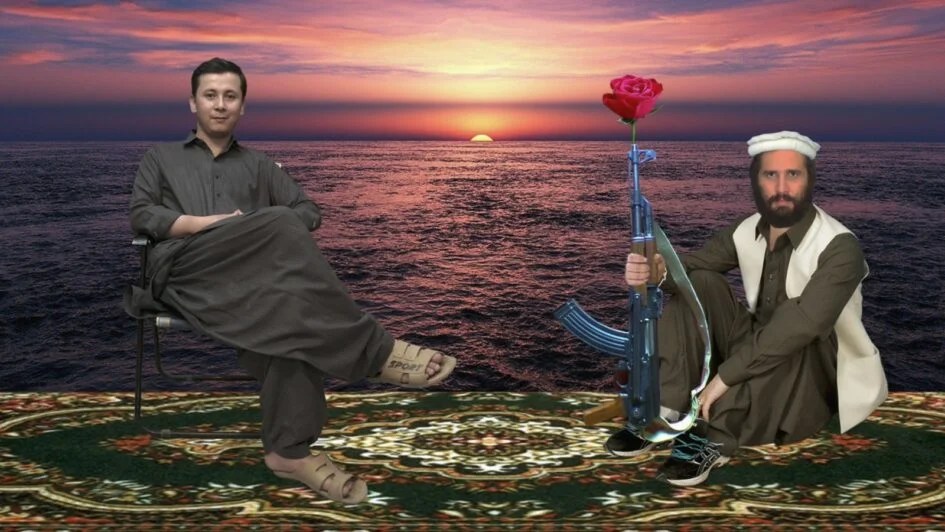
Artists from a wide range of disciplines continue to sustain SIC’s multidisciplinary character. Even more crucially, these artists are provided with the space to interrogate the image – here, the photographic image – critically. This interrogation engages both societal issues and personal concerns. Another example is Danial Shah’s film Make it Look Real, which examines how power and class relations are embedded in aesthetics – both in Shah’s position as a photojournalist for major Western media and in the practice of a fellow villager in Pakistan, a local studio photographer. As a professional photojournalist, Shah earns more than his fellow villager. While Shah’s photographs, with their realist style, enjoy greater prestige, the market photographer retouches his clients’ portraits by adding artificial backdrops and props, and by lightening their skin tones. In their conversations – during which they often alternate the roles of interviewer and interviewee – the two photographers discuss migration (Shah arrived in Belgium on a student visa) and their differing socio-economic positions. By refusing to erase his own presence as a maker from the film, Shah confronts the disparity in privilege between himself and his colleague. Through such choices, Make it Look Real exemplifies the dialogical, participatory spirit that has characterised SIC since its early days, when films of Belgian students were screened on buses in Brussels.
- This text is based on both archival research and conversations with An van Dienderen, Didier Volckaert and Mary Jiménez in the fall of 2025. Thanks also to Laurent Van Lancker for his input.
The French translation of this text is available at the Cinema en atelier website. ↩︎ - Pierre Raemdonck, ‘Door Brussel “crossen”’, Visie, 16 June 2000, p. 20. ↩︎
- Kris Rutten, An van. Dienderen & Ronald Soetaert (2013), ‘Revisiting the ethnographic turn in contemporary art’, Critical Arts, 27:5, p. 459-473. ↩︎
- Sound Image Culture. Aanvraag tot subsidiëring van projecten in het werkingsjaar 2006 in het kader van het Kunstendecreet, p. 21. Consulted in An van Dienderen’s personal archive. ↩︎
- Alexander De Man, Verslag Dag van Het Filmberoep. Film Fest Gent; Centre for Cinema & Media Studies (Ghent University), 2022, p. 9. http://hdl.handle.net/1854/LU-01GXDP0YKQ36GWFTQDCAHTC5BE ↩︎
- Anne Dekerk, ‘Landschapsschets werkplaatsen’, Etcetera, nr. 104, 15 December 2006. https://e-tcetera.be/landschapsschets-werkplaatsen/ ↩︎
- Interview with the author, An van Dienderen and Didier Volckaert, 1 September 2025. ↩︎
- https://soundimageculture.org/laboratory ↩︎
- https://soundimageculture.org/laboratory ↩︎
- SoundImageCulture vzw. Aanvraag structurele subsidie periode 2013-2014. Consulted in An van Dienderen’s personal archive. ↩︎
- Mary Jiménez, in a mail to the author, 9 September 2025. ↩︎
- Mary Jiménez, in a mail to the author, 9 September 2025. ↩︎
- SoundImageCulture vzw. Aanvraag structurele subsidie periode 2013-2014, p. 8. Consulted in An van Dienderen’s personal archive. ↩︎
- https://soundimageculture.org/laboratory ↩︎

